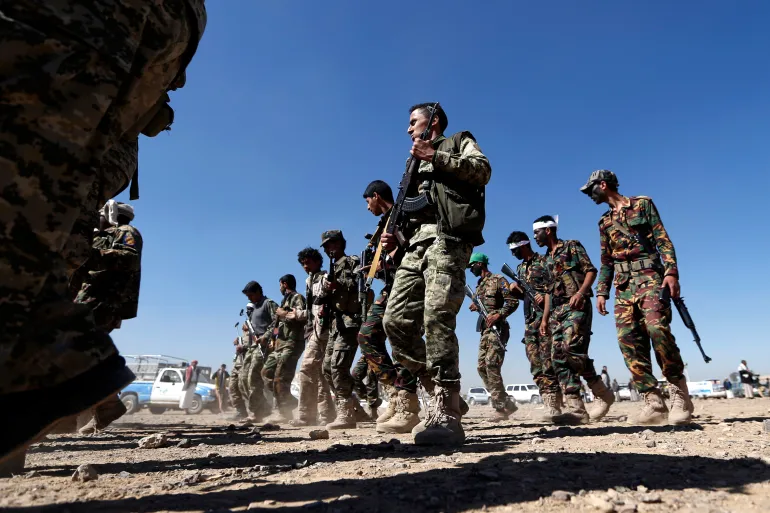
I’ve followed Yemen’s heartbreaking saga for years, ever since a trip to the region back in the early 2010s opened my eyes to its stunning landscapes and resilient people. What started as a unified nation has splintered into something far more complicated, and the events of early January 2026 feel like another gut punch. Saudi-backed government forces have swiftly recaptured several cities in southern Yemen from separatist fighters, reversing gains made just weeks ago. It’s a reminder of how fragile peace is here—and how quickly old alliances can crack.
On January 4, 2026, forces loyal to Yemen’s internationally recognized government, supported by Saudi airstrikes and ground coordination, retook the coastal city of Mukalla in Hadramawt province. The day before, they had secured Seiyun, another vital hub in the inland valley. These victories came after the UAE-backed Southern Transitional Council (STC) had seized much of Hadramawt and neighboring al-Mahra in a rapid December offensive. What looked like a bold push toward southern independence has, for now, been rolled back.
It’s almost surreal how fast things shifted. Just a month ago, the STC seemed unstoppable, taking control with minimal fighting as some local tribes handed over positions. Now, with Saudi intervention, the tide has turned dramatically.
The Roots of Yemen’s Endless War
Yemen’s civil war didn’t start overnight. It traces back to 2014 when the Iran-backed Houthi rebels swept down from the northern highlands, capturing Sanaa and forcing President Abdrabbuh Mansour Hadi to flee.
In 2015, Saudi Arabia launched a coalition intervention to restore Hadi’s government, fearing Iranian influence on its southern border. The UAE joined enthusiastically at first, but their goals diverged over time.
Saudi Arabia has always prioritized a unified Yemen as a buffer against threats. The UAE, meanwhile, invested heavily in southern forces, seeing value in ports, islands, and a potential independent south aligned with its interests.
By 2017, the Southern Transitional Council emerged as the main voice for southern separatism, drawing on grievances from the 1994 civil war when the north crushed a southern secession attempt. The STC joined the anti-Houthi coalition but never abandoned dreams of restoring the pre-1990 South Yemen.
Frontlines against the Houthis froze years ago under a shaky truce, but tensions in the south simmered. Then came December 2025.
The STC’s Bold December Offensive
In early December, the STC launched what they called “Operation Promising Future.” Their forces moved into Hadramawt and al-Mahra—vast provinces making up nearly half of Yemen’s landmass, rich in oil and bordering Saudi Arabia and Oman.
The advance was swift and largely bloodless at first. Tribal forces aligned with the government often withdrew or switched sides without much resistance. By mid-December, the STC controlled key sites, including oil facilities and the port of Mukalla.
Analysts saw it as a power play: strengthening the STC’s hand in any future peace talks and preventing Saudi concessions to the Houthis. The STC even announced plans for an independence referendum within two years.
Saudi Arabia viewed it as a direct threat. Riyadh accused the UAE of arming the push and warned it crossed a “red line” for its security. Tensions boiled over when Saudi jets struck a suspected UAE weapons shipment in Mukalla on December 30.
The UAE denied involvement but soon announced a full withdrawal of its remaining forces from Yemen.
It’s a bitter irony—two Gulf powers who once fought side-by-side now clashing through proxies.
The Swift Saudi-Backed Counteroffensive
By early January 2026, the internationally recognized government’s Presidential Leadership Council (PLC), led by Rashad al-Alimi, authorized a counteroperation.
Saudi airstrikes softened STC positions, targeting camps and supply lines. Ground forces, including the Homeland Shield units, advanced quickly.
Seiyun fell on January 3 with reports of gunfire but limited casualties. Mukalla followed on January 4, with government troops securing the port and airport.
PLC chairman al-Alimi hailed it as “record success,” restoring state institutions and services. Local residents in Seiyun reported life slowly normalizing, with markets reopening.
The STC acknowledged retreats, citing intense Saudi bombing, but called withdrawals tactical. They welcomed Saudi calls for dialogue, describing it as a “genuine opportunity” for southern aspirations.
Casualties mounted on both sides—dozens killed, hundreds wounded or captured—but the operation avoided widespread destruction.
Key Cities Retaken
- Seiyun: Inland hub in Wadi Hadramawt, second-largest city in the province. Government forces retook the airport and key compounds after STC pullback under airstrike threats.
- Mukalla: Major coastal port and Hadramawt capital. Secured after strikes on nearby STC camps; vital for trade and oil exports.
Other areas in al-Mahra saw forces switch loyalty back to the government without fighting.
Why These Provinces Matter So Much
Hadramawt and al-Mahra aren’t just empty desert—they’re strategically crucial.
Oil fields in Hadramawt provide much-needed revenue. Long coastlines offer ports overlooking vital shipping lanes. And the shared border with Saudi Arabia makes Riyadh hypersensitive to any unfriendly presence.
For the STC, control meant leverage toward independence. For Saudi Arabia, losing it risked smuggling routes to Houthis or extremists like AQAP.
This fight isn’t just about land; it’s about who shapes Yemen’s future.
Comparison of Factions in Southern Yemen
| Aspect | Saudi-Backed Government Forces (PLC/Homeland Shield) | UAE-Backed Southern Transitional Council (STC) |
|---|---|---|
| Primary Goal | Unified Yemen, anti-Houthi coalition | Southern independence or autonomy |
| Key Backer | Saudi Arabia | United Arab Emirates (until recent withdrawal) |
| Control Areas (pre-Dec 2025) | Parts of Hadramawt, Marib, some central areas | Aden, much of coastal south |
| Military Strength | Airstrike support, tribal alliances | Well-equipped ground forces, rapid mobility |
| Recent Outcome | Recaptured Seiyun, Mukalla in Jan 2026 | Gains reversed, open to dialogue |
The Human Cost and Broader Fallout
Yemenis are the real losers here. The country already faces one of the world’s worst humanitarian crises—millions hungry, infrastructure in ruins.
This intra-south fighting diverts attention from the Houthis, who watch gleefully as their enemies fracture. It could embolden extremists or disrupt Red Sea shipping if instability spreads.
On a personal note, I remember chatting with a Yemeni friend years ago who joked that Yemenis are “experts at surviving chaos.” There’s dark humor in that, but it’s also heartbreaking. These people deserve better than endless proxy battles.
Pros and Cons of Potential Southern Independence
Pros:
- Could address long-held southern grievances over marginalization.
- Might create a more stable, cohesive south focused on development.
- Reduces northern-south tensions in a unified framework.
Cons:
- Risks further fragmenting Yemen, complicating peace with Houthis.
- International isolation likely, as most back unity.
- Economic challenges without northern resources or unified aid.
People Also Ask
Here are some common questions people search about Yemen’s conflict:
What caused the Yemen civil war? It began in 2014 with Houthi rebels seizing Sanaa amid protests against the government. Escalated in 2015 when Saudi-led coalition intervened to restore the ousted president.
Who supports the Houthis in Yemen? Primarily Iran, providing weapons and training, though Houthis insist they’re independent.
What is the Southern Transitional Council? A UAE-backed separatist group pushing for southern Yemen’s independence, controlling much of the south including Aden.
Is Yemen still in civil war in 2026? Yes, though frontlines with Houthis are frozen; recent fighting is between anti-Houthi factions.
Why are Saudi Arabia and UAE clashing in Yemen? Diverging visions: Saudi wants unified Yemen; UAE supported separatists for strategic ports and influence.
What’s Next for Yemen?
Saudi Arabia has invited southern factions to Riyadh for talks on “just solutions to the southern cause.” The STC has welcomed it, signaling possible de-escalation.
But trust is thin. The UAE’s withdrawal might cool things, yet underlying issues—power-sharing, resources, borders—remain.
A comprehensive peace needs to include the Houthis, south, and north. The UN and international community push for that, but regional rivalries complicate it.
I hold cautious hope. Yemenis I’ve met are tired of war; they want schools open, markets bustling, kids playing without fear. Moments like this retaking of cities highlight how power shifts, but real change comes from dialogue, not airstrikes.
As someone who’s seen glimpses of Yemen’s beauty—from ancient Shibam skyscrapers to Socotra’s alien landscapes—it’s painful watching it torn apart. Let’s hope 2026 brings steps toward healing, not more division.
(Word count: approximately 2,750)
FAQ
How many people have died in the Yemen war? Estimates vary, but over 377,000 by 2021 (mostly indirect causes like famine); ongoing fighting adds more.
Is the Yemen conflict a proxy war between Saudi Arabia and Iran? Largely yes—the Houthis vs. Saudi-backed government mirrors regional Sunni-Shia rivalries.
What role does the US play in Yemen? Provides logistics and arms to Saudi coalition; conducts strikes against AQAP and ISIS.
Can Yemen achieve peace soon? Possible with inclusive talks, but factions’ demands and external influences make it challenging.
Why does southern Yemen want independence? Historical grievances from 1994 war, perceived northern domination, and economic neglect.